Do LED Face Masks Really Work?
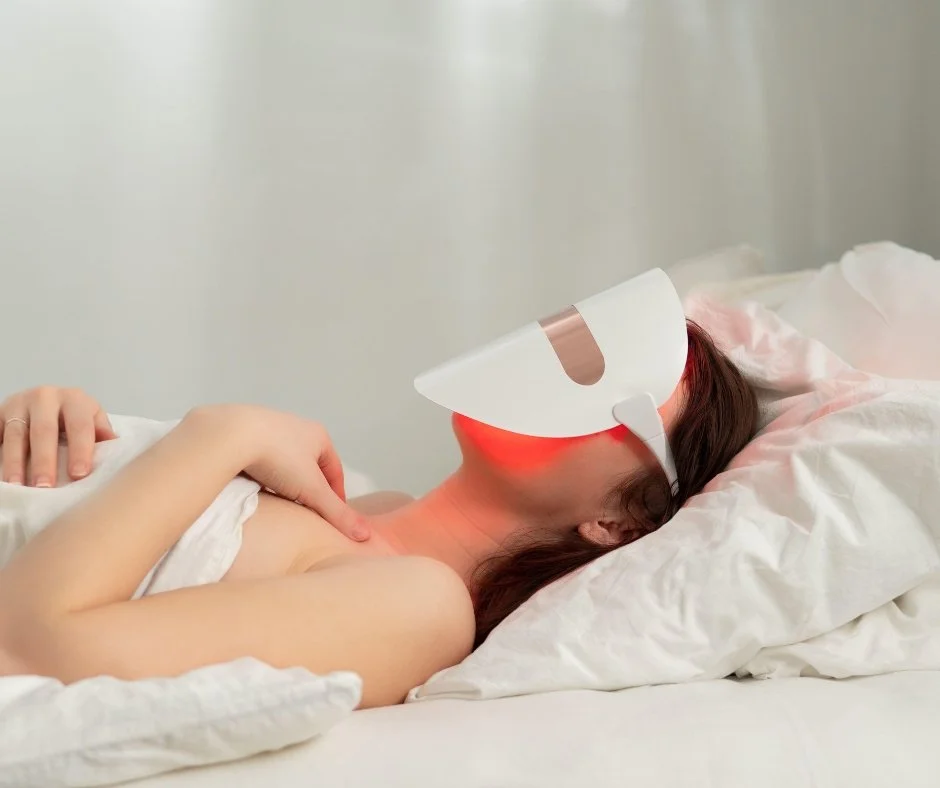
If you’ve spent any time on Instagram lately, you’ve seen the glowing red faces.
They look a little sci-fi. A little dramatic. A little “I am Iron Man but make it skincare.”
But here’s the real question:
Are LED masks actually doing anything… or are they just expensive mood lighting for your bathroom?
Let’s break it down — where this technology came from, what it actually does inside your skin, what results are realistic, and how it fits into a barrier-first skincare strategy.
Because if we’re going to use something, it needs to support the skin — not stress it.
Where LED Therapy Came From
LED therapy didn’t start in the beauty industry. It started with research by NASA in the 1990s.
Scientists were studying red light to grow plants in space. During that research, they noticed something unexpected: red wavelengths appeared to stimulate cellular repair and speed up healing.
From there, the medical community began studying light therapy for wound healing and inflammation. Eventually, skincare adopted it — not because it was trendy, but because it was biologically interesting.
And that’s when things got exciting.
What Light Actually Does in the Skin
This is where we get just nerdy enough to understand what’s happening without needing a PhD.
Inside your skin cells are mitochondria — tiny structures responsible for producing energy. When certain wavelengths of light hit the skin, they stimulate a molecule inside the mitochondria that increases ATP production.
ATP is the energy currency of the cell.
More ATP means your cells have more energy to repair, regulate inflammation, and produce collagen appropriately.
LED isn’t burning. It isn’t wounding. It isn’t forcing trauma to get a reaction.
It’s supporting cellular energy.
That distinction matters.
Because at Holladay Spa, our philosophy is simple:
Barrier Health First. Fix the cause, not the symptoms. Slow and steady wins the race.
LED fits that philosophy beautifully.
The Different Light Colors (And Why They Matter)
When we talk about red light, blue light, or near infrared, we’re really talking about wavelength. The wavelength determines how deeply the light penetrates and which cells it influences.
Red light, typically in the 630–660 nanometer range, is the most studied in skincare. It supports collagen production, reduces inflammation, and helps improve overall skin tone over time.
Blue light sits in the 405–420 nanometer range and is primarily used for acne because it targets acne-causing bacteria. It can be helpful during active breakouts, but it’s not something most people need every single day.
Green and yellow lights are sometimes marketed for pigmentation and redness. They can be supportive, but their results are usually subtle and slower compared to red and near infrared.
Near infrared light, which falls between 810–850 nanometers, penetrates the deepest. It plays a powerful role in reducing inflammation and supporting tissue repair. You don’t see it — it’s invisible to the eye — but it’s one of the most valuable wavelengths for long-term skin health.
If a device doesn’t clearly list its wavelengths, that’s worth questioning. The color alone isn’t enough information.

What Is Irradiance (And Why Should You Care)?
Here’s a term that sounds complicated but isn’t.
Irradiance simply refers to the strength or intensity of the light.
Wavelength determines the type of light.
Irradiance determines how much of it your skin receives.
If the output is too weak, you may not see meaningful change. If it’s appropriately calibrated, you’ll get gradual, cumulative results over time.
Most well-made at-home masks fall into a safe but effective range. Professional devices used in treatment rooms are stronger and can produce faster visible improvement because they deliver more energy in a shorter period.
That’s one of the biggest differences between spa treatments and home devices.
What Results Can You Realistically Expect?
This is where expectations need grounding.
LED is not a one-treatment miracle. It’s not going to replace surgery. It’s not going to erase deep wrinkles in two weeks.
What it can do — when used consistently — is improve texture, calm redness, reduce inflammatory breakouts, and support firmer-looking skin over time.
Think in terms of eight to twelve weeks of consistent use, several times per week.
LED is not aggressive. And that’s actually the point.
We’re not trying to shock the skin into change. We’re trying to support it into regulation.
Regulated skin functions better.
Skin that functions better looks better.
Who Should Be Cautious With LED
LED therapy is generally very safe, but there are a few situations where caution is important.
If someone has epilepsy triggered by light, is taking medications that increase light sensitivity, or has active skin cancer, they should speak with a medical professional before use.
And while red light has been studied for potential eye health benefits, staring directly into high-intensity LEDs without protection isn’t smart. Eye protection is always a good idea.
Professional vs. At-Home LED
In the treatment room at Holladay Spa, LED is layered strategically into facials like our Oxygen Facial. It’s not used alone. It’s part of a system that supports circulation, oxygenation, and barrier repair.
Professional treatments allow us to customize wavelengths and combine them with corrective products in a controlled way.
At-home masks are wonderful for maintenance. They’re convenient, accessible, and effective when used consistently.
Think of it like working out. A trainer-guided session may move you forward faster, but what you do consistently at home determines your long-term results.
You need both for optimal progress.
Are LED Masks Worth It?
Yes — if you’re using a well-designed device, you understand the timeline, and you’re not expecting overnight transformation.
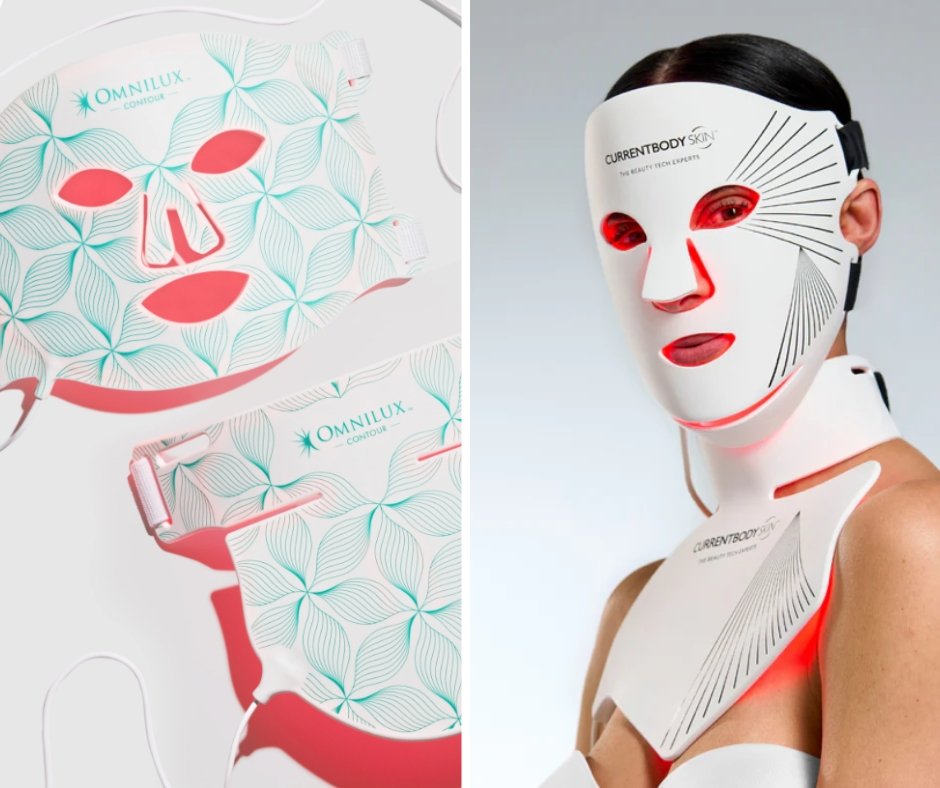
Two devices that consistently meet good wavelength standards and have FDA clearance are:
Omnilux Contour Face
CurrentBody Skin LED Light Therapy Mask
They’re not the cheapest options on the market. But specifications matter. Engineering matters. Consistency matters.
Why LED Aligns With Our Barrier-First Philosophy
This is the part I love most.
LED doesn’t strip.
It doesn’t peel.
It doesn’t inflame in order to “fix.”
It increases cellular energy so your skin can regulate itself better.
When the skin barrier is supported and inflammation is reduced, everything improves — acne, redness, aging, pigmentation. Not because we attacked the symptom, but because we improved function.
And that’s always the goal.
If you’re local and looking for the best facial in Charlottesville that supports long-term skin health without aggressive downtime, we already incorporate medical-grade LED into treatments designed to strengthen your skin, not stress it.
Because trends are fun.
But healthy skin that lasts?
That’s better.
Want to try it before you buy it?
LED works best when it’s part of a bigger picture. That’s why we don’t offer it as a standalone add-on — we integrate it into treatments like our Nano Infusion Treatment, Age Reversing Facial, and Oxygen Facial, where it supports everything else we’re doing for your skin. If you’re in Charlottesville and want results without downtime or guesswork, you can book any of those services and know your skin is being treated with a plan, not just a trend.