
What’s the deal with Vitamin C?
Is It Really the Best Antioxidant for Your Skin?
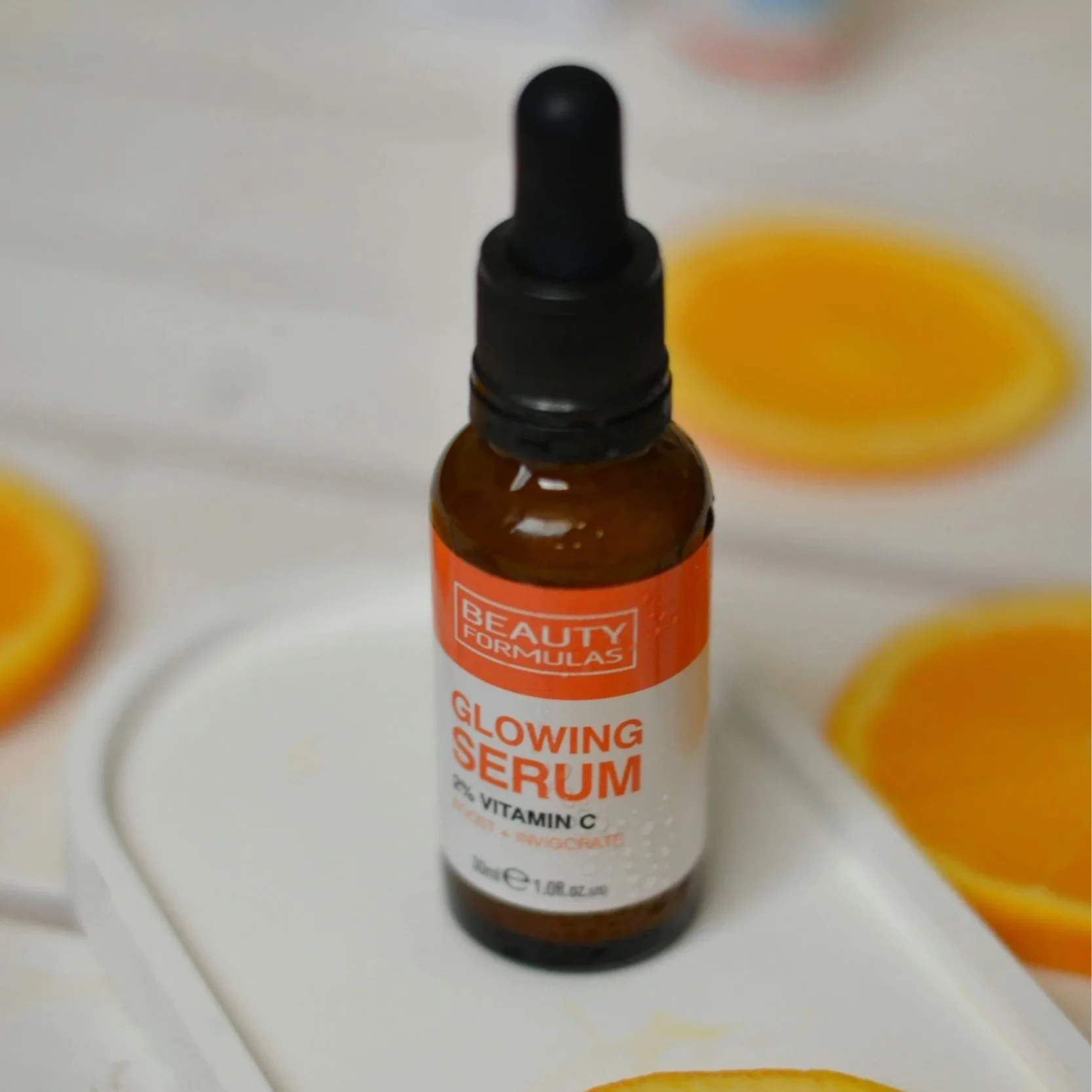
If you’ve spent any amount of time in the skincare world, you’ve probably heard that you need a Vitamin C serum.
Not that Vitamin C might be helpful.
Not that it could be a good choice depending on your skin.
You need one.
Vitamin C has somehow earned a permanent spot on the imaginary list of skincare products everyone is supposed to use, right alongside cleanser, moisturizer, and sunscreen.
But is Vitamin C really that special?
Well…yes.
And also no.
Vitamin C is an excellent skincare ingredient with some unique benefits. But it’s also only one member of a much larger—and incredibly interesting—family of antioxidants.
And depending on your skin, it may not even be the antioxidant you need most.
First, What Do Antioxidants Actually Do?
To understand why antioxidants matter, we first have to talk about free radicals.
Every day, your skin is exposed to UV radiation, pollution, inflammation, and other sources of oxidative stress. Even the normal processes happening inside our own cells can produce unstable molecules called free radicals.
Without getting too deep into chemistry class, free radicals are unstable because they’re missing an electron. In their quest to become stable again, they can essentially steal electrons from other molecules.
This can set off a chain reaction that damages proteins, lipids, and even DNA.
Over time, that oxidative damage contributes to inflammation, collagen breakdown, uneven pigmentation, and many of the changes we associate with aging skin.
Enter antioxidants.
Antioxidants can help neutralize free radicals and interrupt that chain reaction before more damage occurs.
Think of them less as the construction crew rebuilding your house and more like the maintenance team helping prevent unnecessary damage from accumulating in the first place.
And this is why I believe some form of topical antioxidant protection belongs in almost everyone’s skincare routine.
We spend a lot of time and money trying to correct skin concerns after the damage has already happened. But if we can help protect our collagen, support our skin barrier, and reduce some of the oxidative stress our skin encounters every single day, why wouldn’t we?
Let’s protect our assets!
That doesn’t mean everyone needs the same antioxidant serum. Your best choice might be Vitamin C. It might be glutathione, niacinamide, Vitamin E, green tea, or a formula that combines several antioxidants together.
The important part is recognizing that antioxidants aren’t just trendy “anti-aging” ingredients. They’re an important part of a smart, preventative skincare routine.
Which brings us back to Vitamin C.

So Why Does Vitamin C Get All the Attention?
To be fair, Vitamin C deserves a lot of the attention it gets.
It’s a powerful antioxidant, but it also brings some additional talents to the table.
Vitamin C plays an important role in collagen production and can help improve the appearance of uneven pigmentation. That combination makes it especially appealing for people concerned with sun damage, discoloration, and visible signs of aging.
So, yes. Vitamin C can absolutely be a fantastic skincare ingredient.
But somewhere along the way, the message changed from “Vitamin C is beneficial” to “everyone needs a Vitamin C serum.”
Those aren’t the same thing.
The Problem? Vitamin C Can Be a Bit of a Diva.
Pure Vitamin C, also known as L-ascorbic acid, is notoriously difficult to formulate.
It doesn’t particularly enjoy light.
Or air.
Or heat.
It requires the right pH, the right concentration, and the right packaging to remain stable and effective.
When it oxidizes, that expensive bottle of Vitamin C serum may become less effective—and potentially more irritating.
And speaking of irritation, more isn’t necessarily better.
Higher concentrations of L-ascorbic acid can be difficult for sensitive, reactive, or barrier-compromised skin to tolerate.
There are more stable Vitamin C derivatives available that may be gentler on the skin, but this is where formulation becomes incredibly important.
Simply seeing “Vitamin C” printed on the front of a bottle doesn’t tell you whether that product is well formulated, stable, appropriate for your skin, or something you actually need.
Is Vitamin C Right for You?
Maybe!
If your primary concerns are sun damage, uneven pigmentation, or supporting collagen production, a well-formulated Vitamin C product may be an excellent addition to your routine.
But what if your skin is sensitive and reactive?
What if inflammation is your biggest concern?
What if your skin barrier needs more support?
What if you’re already using several active products and adding another one creates more irritation than benefit?
That’s when it helps to remember something the skincare industry doesn’t talk about nearly enough:
Vitamin C is not the only antioxidant available to us.
Not even close.
Meet Some of the Other Antioxidant Powerhouses
One of the most interesting things about antioxidants is that they don’t necessarily work alone.
Different antioxidants operate in different environments and through different mechanisms. Some can even help support or regenerate other antioxidants after they’ve done their job.
Instead of looking for one antioxidant superhero, it may make more sense to think about building an antioxidant team.
Glutathione: The Master Antioxidant
Glutathione is probably my personal favorite antioxidant.
Often referred to as the “master antioxidant,” glutathione plays a central role in the body’s natural antioxidant defense system.
When antioxidants neutralize free radicals, they can become oxidized themselves. Glutathione is particularly interesting because the body has systems that can regenerate it back into its active form so it can continue participating in antioxidant defense.
It also interacts with other antioxidant systems and plays an important role in helping cells manage oxidative stress.
In other words, glutathione is less like one person running around trying to do everything and more like a very important member of the team helping the entire operation function.
Vitamin E: The Lipid Protector
Vitamin E is a fat-soluble antioxidant, which means it’s especially helpful in protecting the lipid—or fatty—parts of our cells from oxidative damage.
Why does that matter for your skin?
Because healthy lipids are incredibly important for maintaining a strong, functioning skin barrier.
Vitamin E also works particularly well alongside Vitamin C, which is another great example of why antioxidants shouldn’t always be viewed individually.
Sometimes the magic is in the teamwork.
Niacinamide: The Multitasker
If your skin needs a little bit of everything, niacinamide deserves some attention.
Also known as Vitamin B3, niacinamide can help support the skin barrier, improve the appearance of uneven pigmentation, calm inflammation, and support healthier skin function.
For someone with sensitive, reactive, or easily irritated skin, niacinamide may make more sense than immediately reaching for a strong L-ascorbic acid serum.
It may not have Vitamin C’s celebrity status, but it’s an incredibly useful ingredient.
Green Tea: The Soothing Antioxidant
Green tea contains polyphenols, including EGCG, that have antioxidant and soothing properties.
This makes green tea especially interesting for skin that regularly deals with redness, inflammation, or environmental stress.
Again, we come back to the same idea:
The “best” antioxidant depends entirely on what your skin needs.
Coenzyme Q10: The Cellular Energy Antioxidant
Coenzyme Q10—also called ubiquinone or CoQ10—plays a role in cellular energy production while also functioning as an antioxidant.
Our natural levels of CoQ10 decline as we age, which makes it an especially interesting skincare ingredient for supporting aging skin.
And there are so many others.
Ergothioneine. Alpha lipoic acid. Astaxanthin. Resveratrol. Grape seed extract.
The antioxidant world is much bigger than Vitamin C.
What If We Stopped Looking for the “Best” Antioxidant?
This is where skincare formulation gets really interesting.
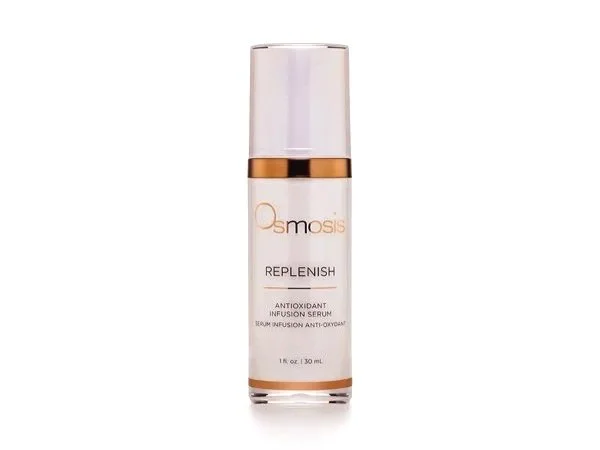
At Holladay Spa, one of the antioxidant products we love is Osmosis Replenish Antioxidant Infusion Serum.
And there’s a reason it contains 17 different antioxidants instead of putting all its eggs in one antioxidant basket.
Replenish includes many of the antioxidants we’ve already talked about, including niacinamide, CoQ10, glutathione, ergothioneine, alpha lipoic acid, astaxanthin, green tea, Vitamin E, and a collection of antioxidant-rich botanical extracts like resveratrol-containing knotweed, ginkgo biloba, olive leaf, and grape seed.
That variety matters.
Different antioxidants bring different strengths to the formulation. Some help defend against oxidative stress. Some support the skin barrier. Some are particularly helpful for calming inflammation. Others support the systems that help our skin function and recover.
Replenish also includes Palmitoyl Tripeptide-38, a peptide that supports the appearance of healthier, firmer skin, along with beta-glucan and panthenol to provide additional soothing and barrier support.
This is one of the reasons I prefer thinking about skincare ingredients as a team rather than constantly searching for the next miracle ingredient.
Because healthy skin is complicated.
Oxidative stress is complicated.
And sometimes a thoughtfully formulated combination of ingredients makes more sense than chasing the highest possible percentage of whichever ingredient happens to be trending on social media.
So…Do You Need a Vitamin C Serum?
Maybe.
I know. Not the most satisfying answer.
But skincare rarely has universal answers.
Vitamin C deserves its reputation as an excellent skincare ingredient. Its antioxidant activity combined with its role in collagen production and pigmentation makes it particularly useful for certain skin concerns.
But that doesn’t mean everyone needs a separate Vitamin C serum.
Someone focused on pigmentation and sun damage may benefit tremendously from Vitamin C.
Someone dealing with sensitive, inflamed, or barrier-compromised skin may benefit more from antioxidants that provide additional soothing and barrier support.
And someone looking for broader antioxidant protection may prefer a formula that combines multiple complementary antioxidants instead of relying on just one.
The goal isn’t to collect every popular skincare ingredient.
It’s to give your skin what it actually needs.
Sometimes that’s Vitamin C.
Sometimes it’s glutathione, niacinamide, Vitamin E, green tea, or CoQ10.
And sometimes it’s an entire team of antioxidants working together.
Because when it comes to healthy skin, more isn’t always better.
Better is better.